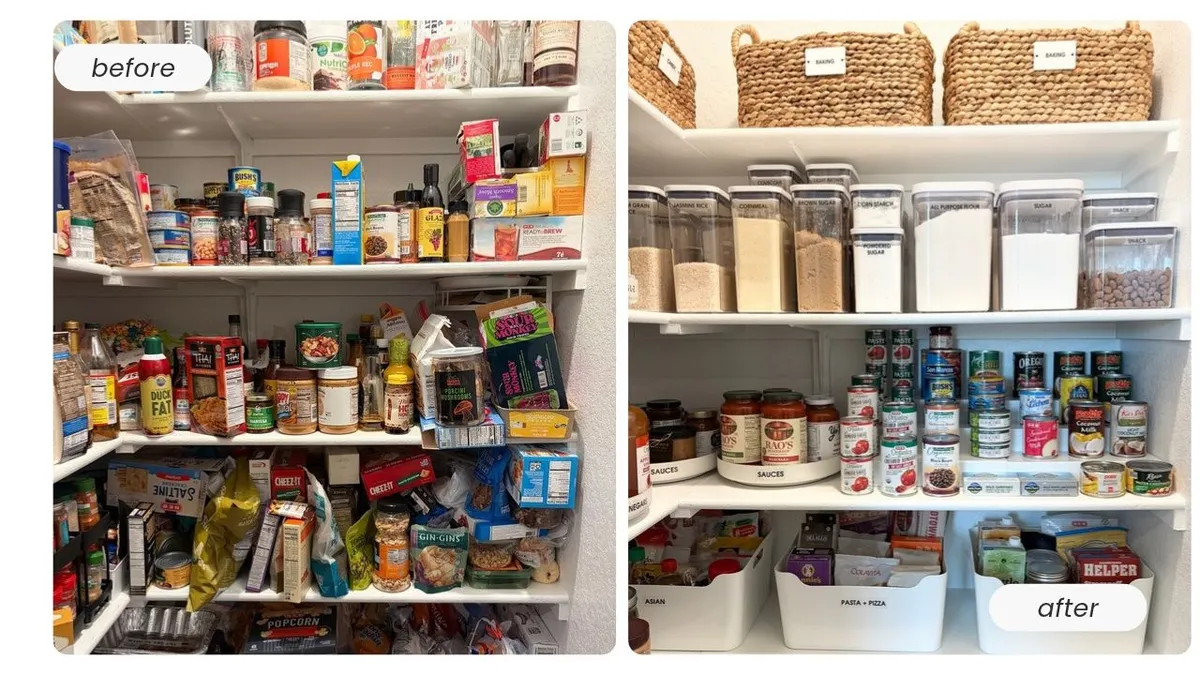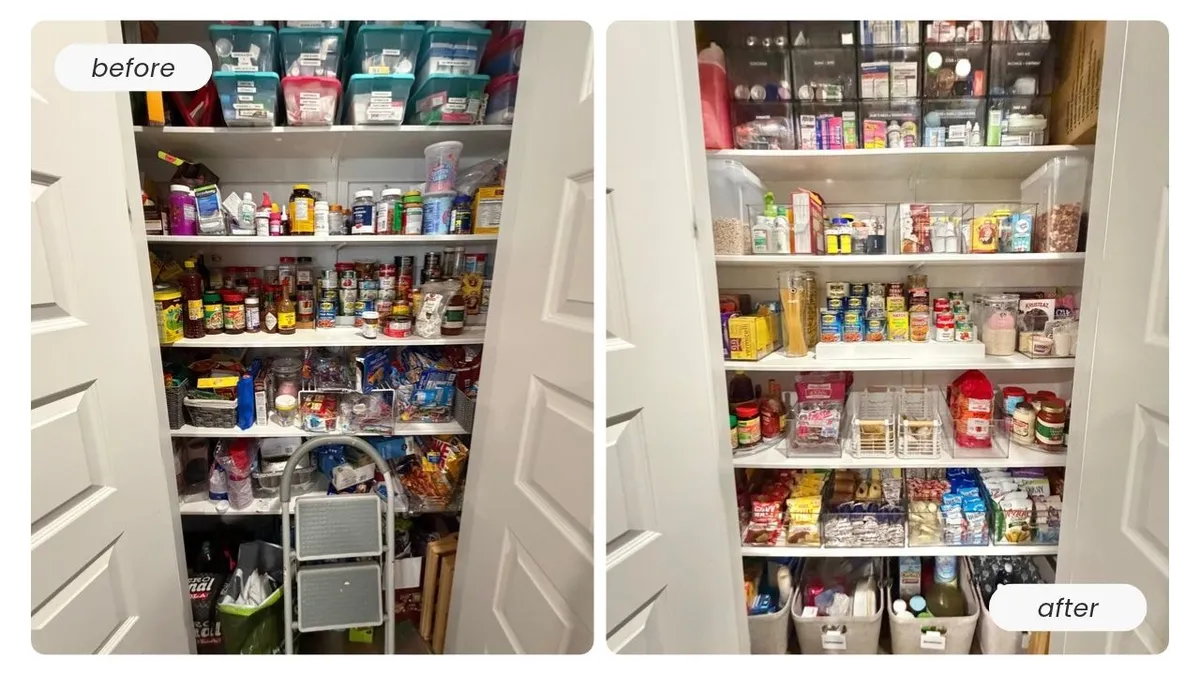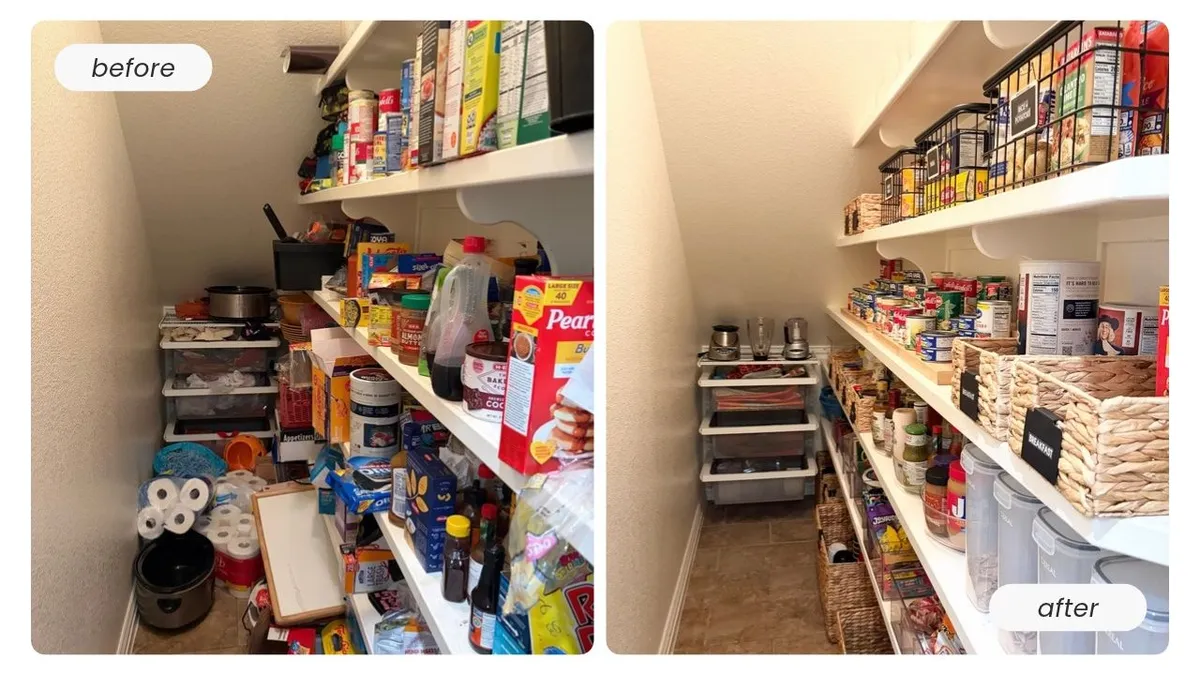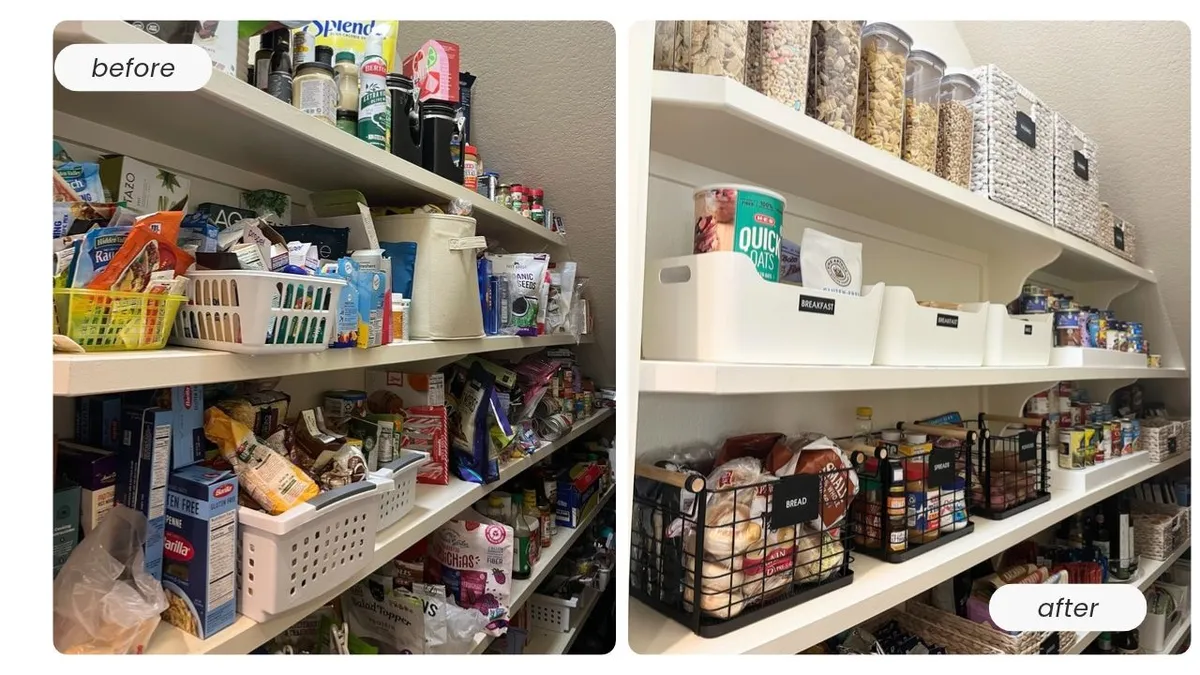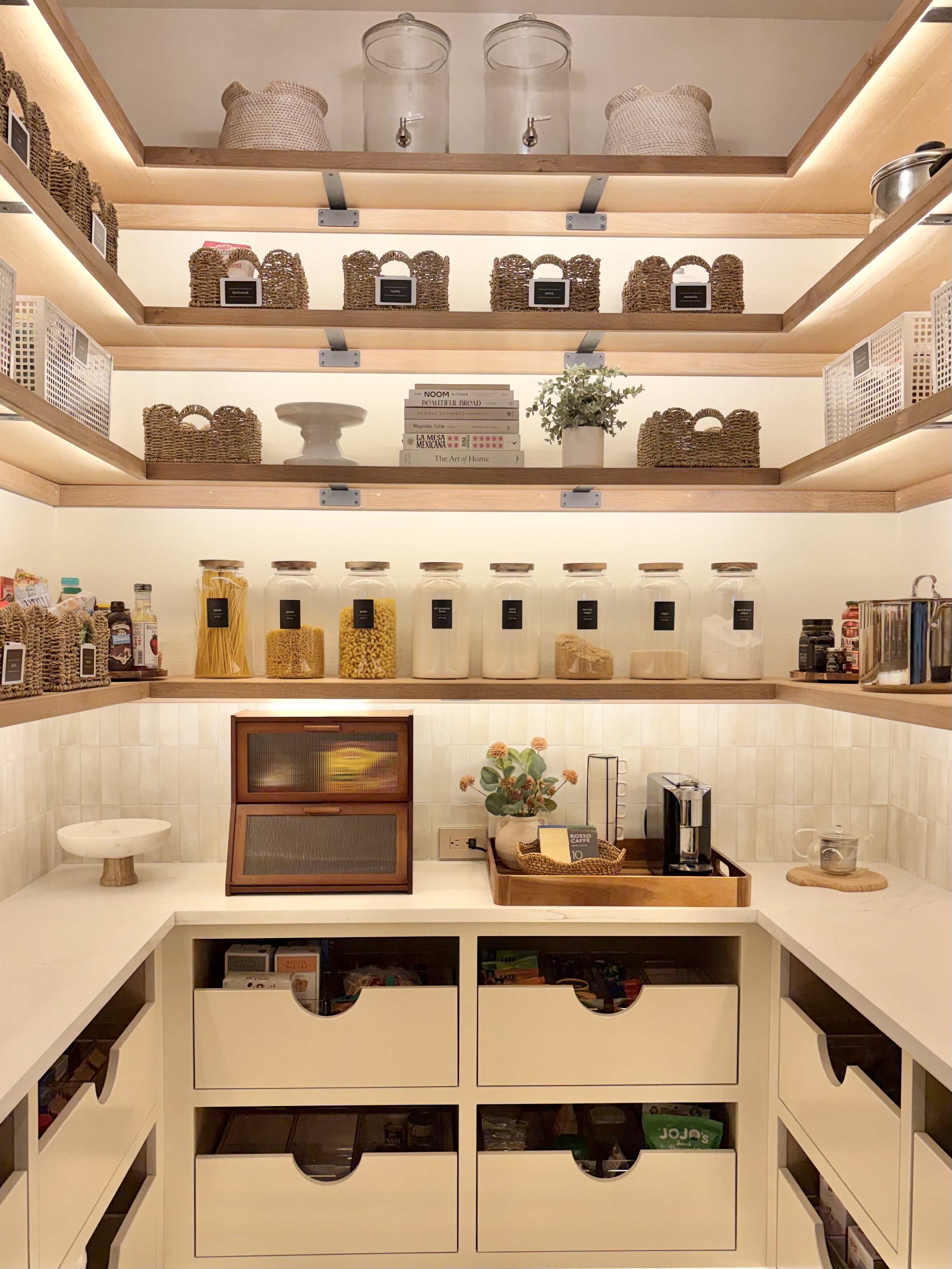
The walk-in.
Plenty of room, which is exactly the problem. Things migrate to the back and are never seen again. Walk-ins need zones and structure to ever stand a chance.

It isn't that you're disorganized. It's that you couldn't see them. We design pantry systems your whole family can actually keep up. Two sessions, product sourced for your space, and labels on everything.
The kids can't reach their own snacks, so they ask you. Nobody else can put the groceries away, because nobody else knows where anything goes. And there's a box in the back that expired before last summer.
Nothing in that pantry was ever set up on purpose. It filled in around whatever was already there, one grocery run at a time, until the only person who could find anything was you. And now even you can't.
We fix the design, not your habits.
You can see everything you own without moving a single thing
You stop rebuying groceries you already have
The kids get their own snacks without calling for you
Anyone can put the groceries away, because everything has a label
Grocery shopping starts with a look instead of a guess
Dinner planning takes a minute instead of a meltdown
The most common thing I hear at the reveal:
"I can actually see everything."
The second most common:
"It looks like I could really keep up with this."
That second one is the whole point.
Our pantry projects run in two sessions, a few days apart:
01
We start with you walking us through the space in person, even though we already talked about it on the phone. You point things out, we get a visual, and we ask the questions that shape everything else.
ONE DECISION POINT
Do you want us tossing anything expired as we go and donating non-perishables to a local food pantry, or would you rather review every past-date item yourself? Your answer decides how the day runs.
Then we get to work. Folding tables go up in the kitchen and anywhere else you're comfortable with us using. Everything comes out of that pantry and onto a surface, sorted into categories as it lands: pasta with pasta, breakfast with breakfast, cans with cans, snacks with snacks. Dates get checked on the way out.
With the pantry empty, we clean it. Vacuum, wipe down the crumbs and the sticky mysterious ring where something leaked a while back. Then we measure every shelf, every wall, every inch of floor.
With everything laid out where you can see it, we walk through it with you.
Then we walk you through product. We will show you our lookbook, find out whether you want all clear or something that matches the rest of your house, and get a sense of your budget.
• Every appliance and non-food item gets a decision: keep, donate, trash, or relocate
• We ask how often you use each thing, so we know how easy it needs to be to reach
• We ask who uses what. Do the kids need to reach this? Do you want this out of their reach?
• We double check the food you're keeping, because some of it you already know you won't eat
Before we leave, everything goes back in a way you can live with. Not the final system, but functional, with sticky notes so you know where things landed for the next few days.
+
You get a mood board with every product we recommend and the total budget attached. You approve it, we order it. Nothing gets bought before you say yes.
02
Product comes in, everything gets a home, and we label all of it. You end the day with a pantry that has a logic anyone in your house can follow, and the labels to prove it.
One-day option
If you need the whole thing done in a single day, we can usually make that work. We come out for a meet-and-measure first, so the product is ordered and ready to use day one.
Every pantry seems to be one of four shapes, and each one fails in its own specific way.
Plenty of room, which is exactly the problem. Things migrate to the back and are never seen again. Walk-ins need zones and structure to ever stand a chance.
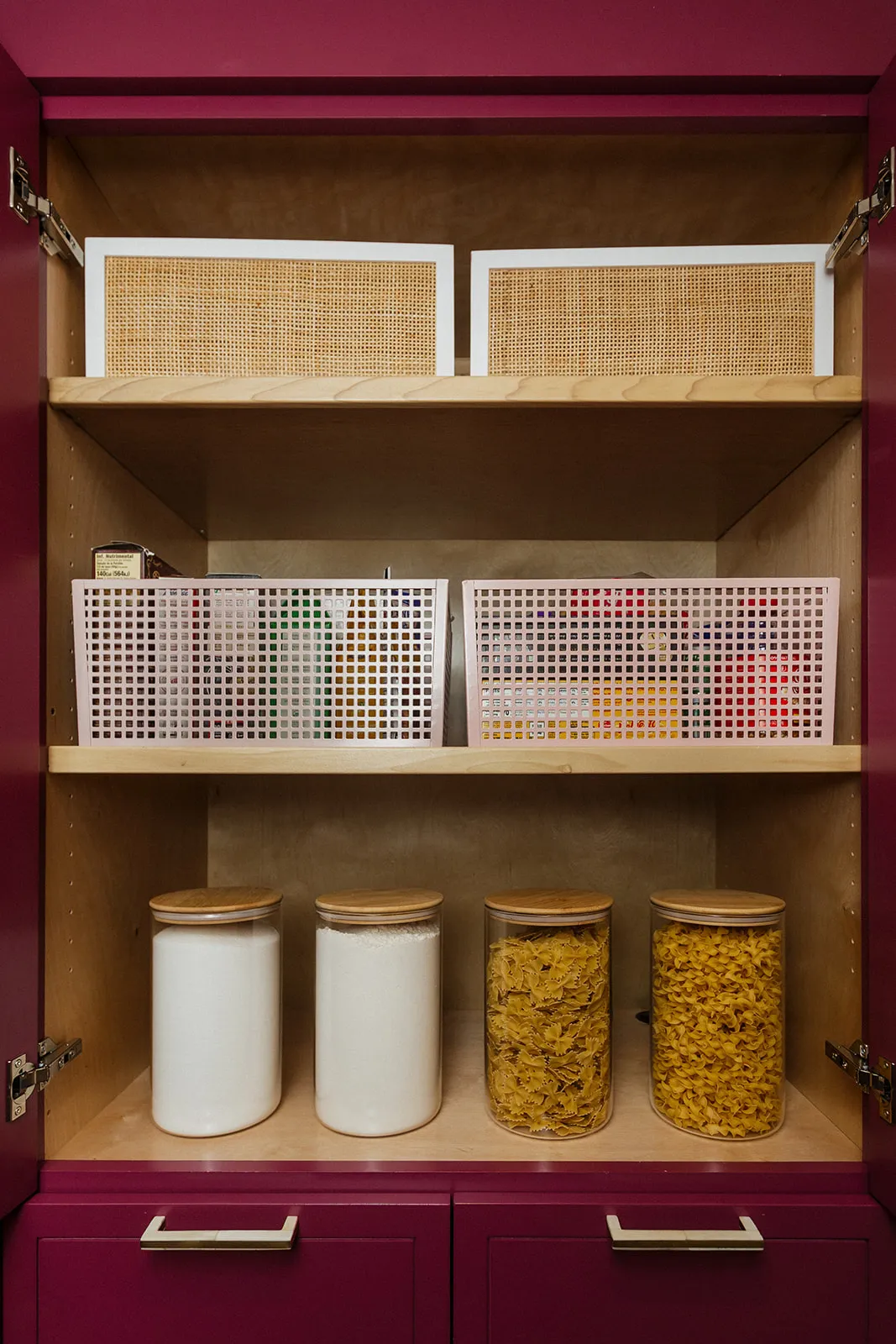
There is barely any width to work with, but the depth is swallowing everything whole.
These get long, shallow bins that pull out like drawers, so the back is as reachable as the front.
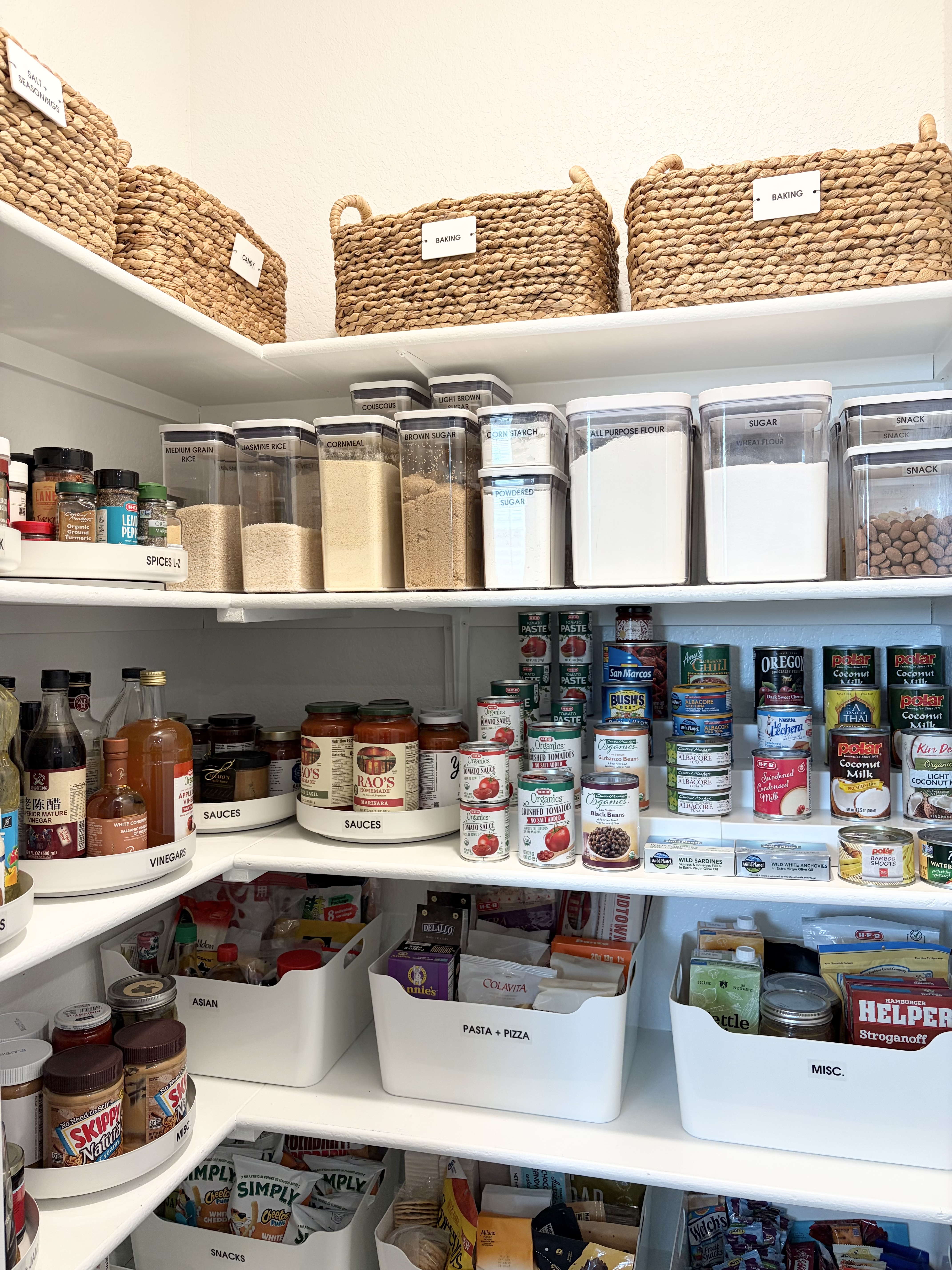
There’s a triangle of dead space where two walls meet, and it’s holding four bottles of vinegar you forgot about. I put Lazy Susans in every corner, no exceptions. They’re also the fix for a deep corner cabinet, which has the same problem in a smaller package.
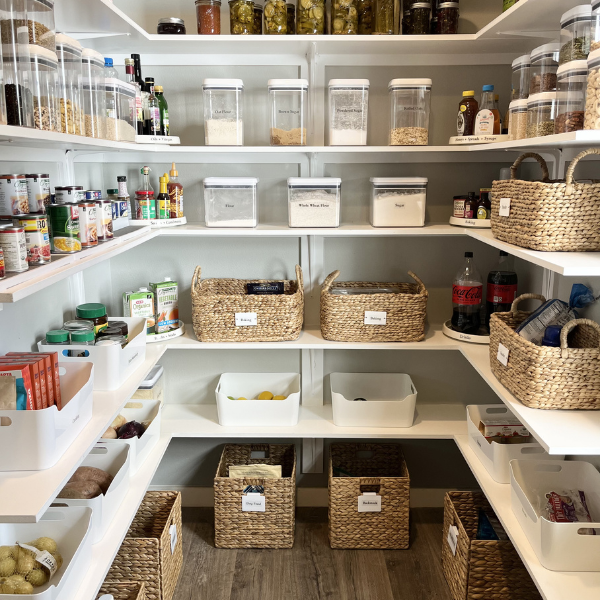
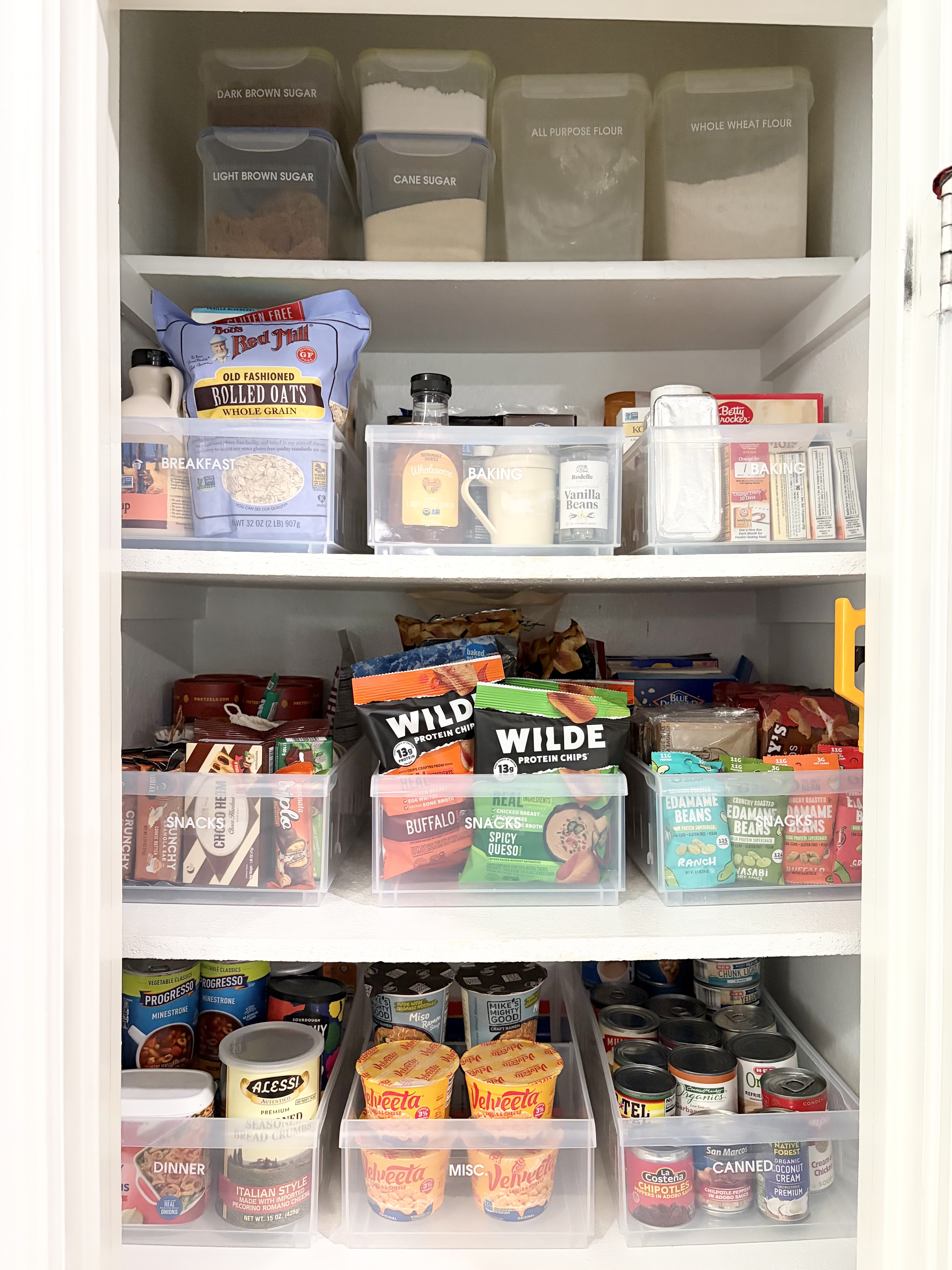
Not quite a walk-in, more than a closet. These live or die on vertical space and on getting the back stock off the shelves and onto the top shelves or floor.
Whichever one you have, the measuring happens before the product is chosen.
That's why we never show up with bins that don't fit.
We source everything. You don't have to shop, measure, return, or guess.
Clear is our default, especially for households with kids or an ADHD brain in the mix, because you won’t use what you can't see. If you'd rather the pantry match the design of the rest of your house, we build to that instead. You can have a pretty pantry that is also functional.
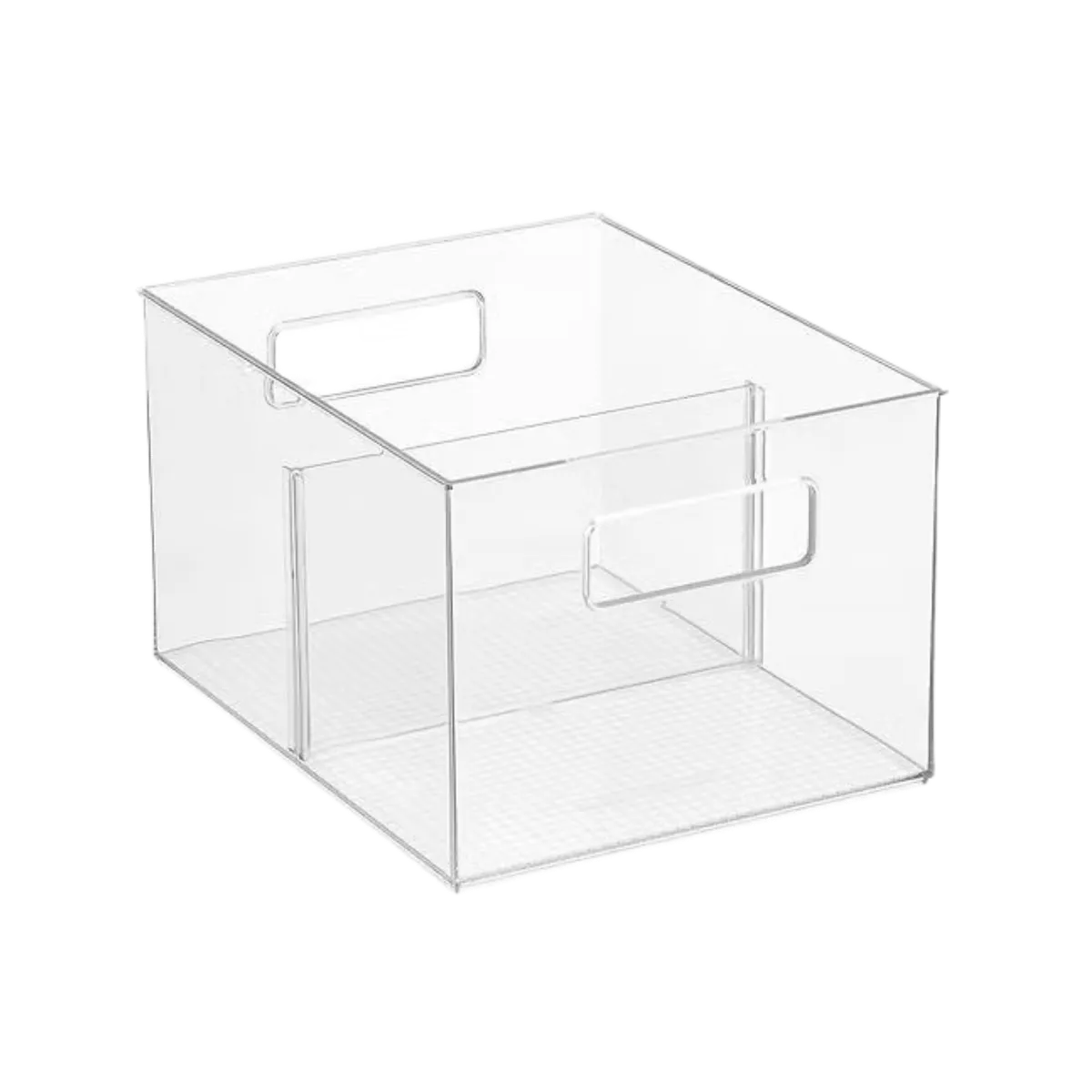
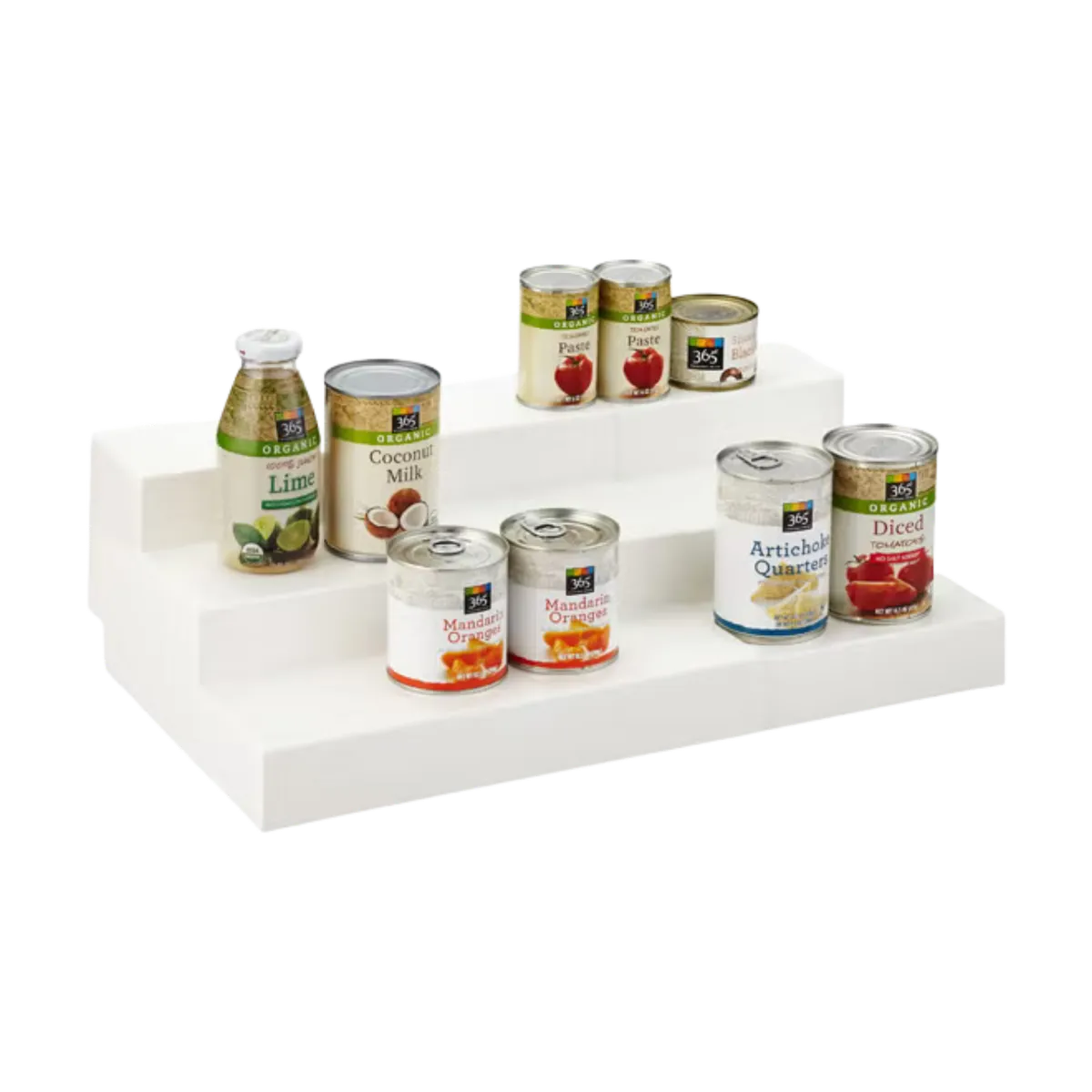
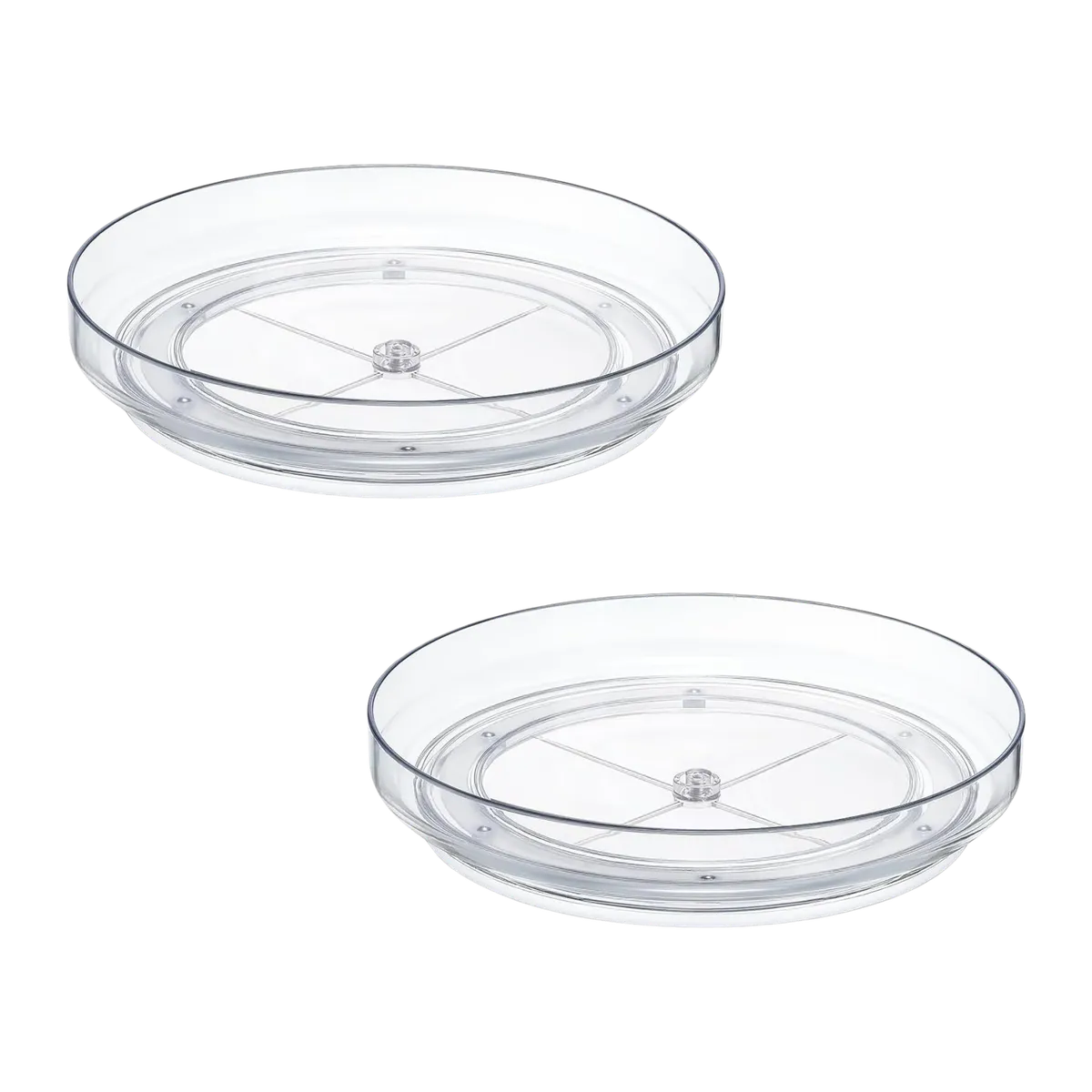
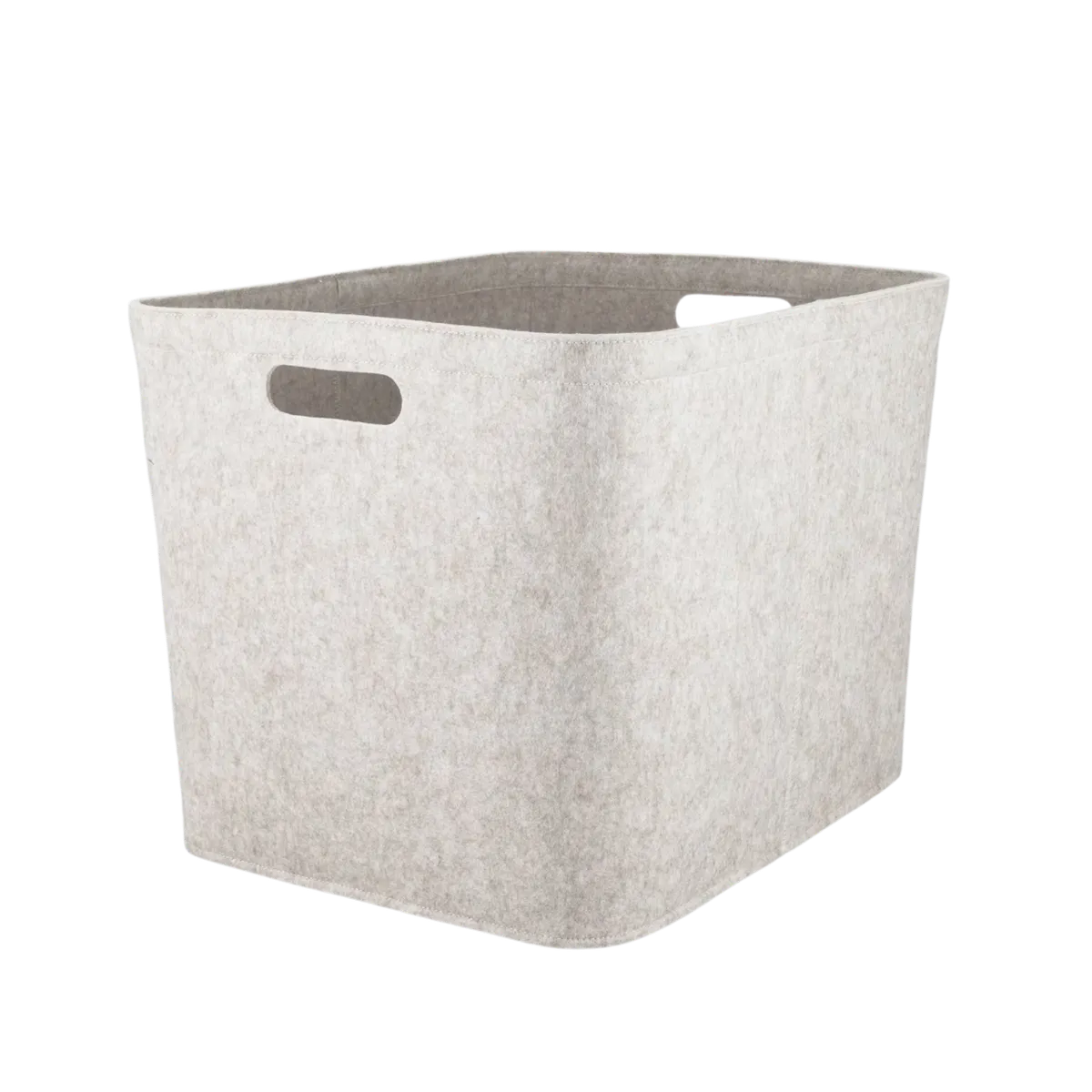
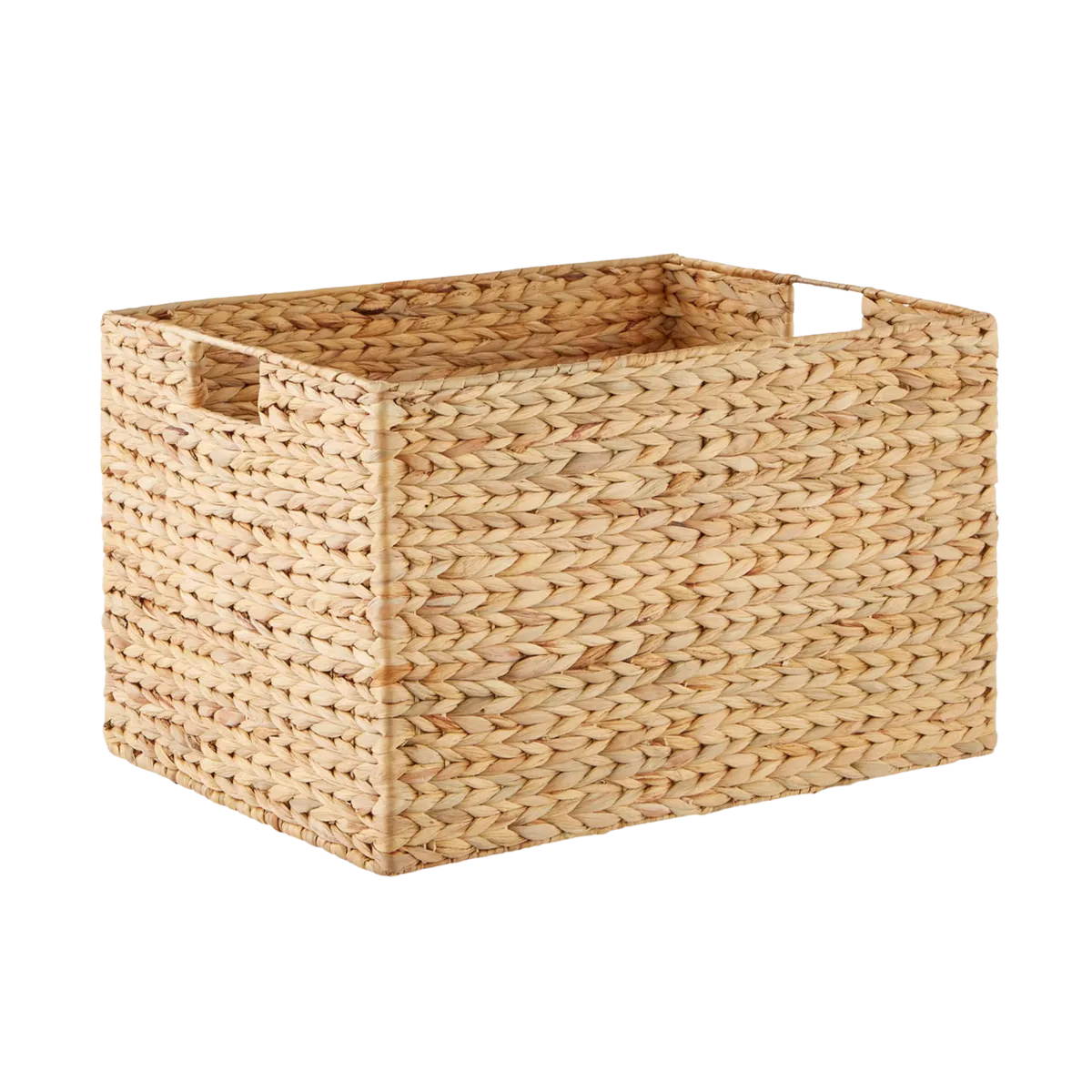
• Bins and baskets on the shelves to hold each main category
• A three-tier can organizer, always, if you keep cans. You can read every label to the back row.
• Lazy Susans in every corner. Also excellent for bottles, sauces, jars, and sometimes cans, even when there's no corner involved.
• Oversized floor baskets for back stock or as a snack dump so the kids can grab from the variety pack themselves. cans, even when there's no corner involved.
• A home for the non-food things: reusable bags, lunch boxes, paper towels, plastic and paper goods.
On decanting: We'll ask on day one, and we'll talk you out of it if it won't stick. Pouring your cereal and pasta into containers looks good and makes it obvious how much you have left. It also adds a step to every grocery trip. I only decant what you'll genuinely keep up with, which for most families is cereal, pasta, flour, and sugar.
Organizing for an ADHD brain? See how we approach it → ADHD Home Organization
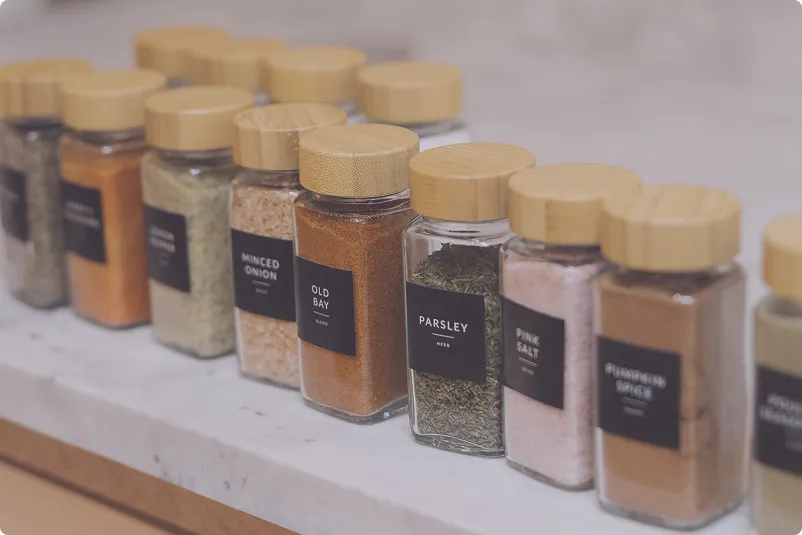
Most people don't own a label maker. The ones who do usually can't remember how to use it.
We label everything before we leave. Not because it looks nice in photos, though it does, but because a system nobody can read is a system that lasts about nine days. Labels are how your partner knows where the rice goes without asking, and how the pantry still makes sense 6 months later, even after the kids help put away groceries.
$2,000 - $4,000
Most pantry projects land between $2,000 and $4,000, product included.
Organizing more than the pantry?
Our home organizing packages are priced by hours and cover the whole house.
Where you land comes down to three things: the size of the space, how much you're keeping, and the product style you choose. A builder-grade reach-in with a moderate amount of food sits at the low end. A luxury walk-in with built-ins, where the product needs to match the design of the house, sits at the top.
You'll see your exact number before anything is ordered. The mood board after day one has every recommended product and the total attached, and nothing is purchased until you approve it.
You could. On your own, you'll clear out the expired food and tidy up the shelves. That's work we’ve all done and it looks better after a weekend of work. It just won't hold, because tidying isn't the same as building a system.
We know which questions to ask you now so the system still works in six months, questions you wouldn't think to ask yourself. We know where every brand hides its expiration date, so checking dates takes minutes instead of an afternoon.
And we come with a team who does this for a living, so it gets done quickly and effectively.
You're not paying us to put things in bins. You're paying us so it's still working months later.
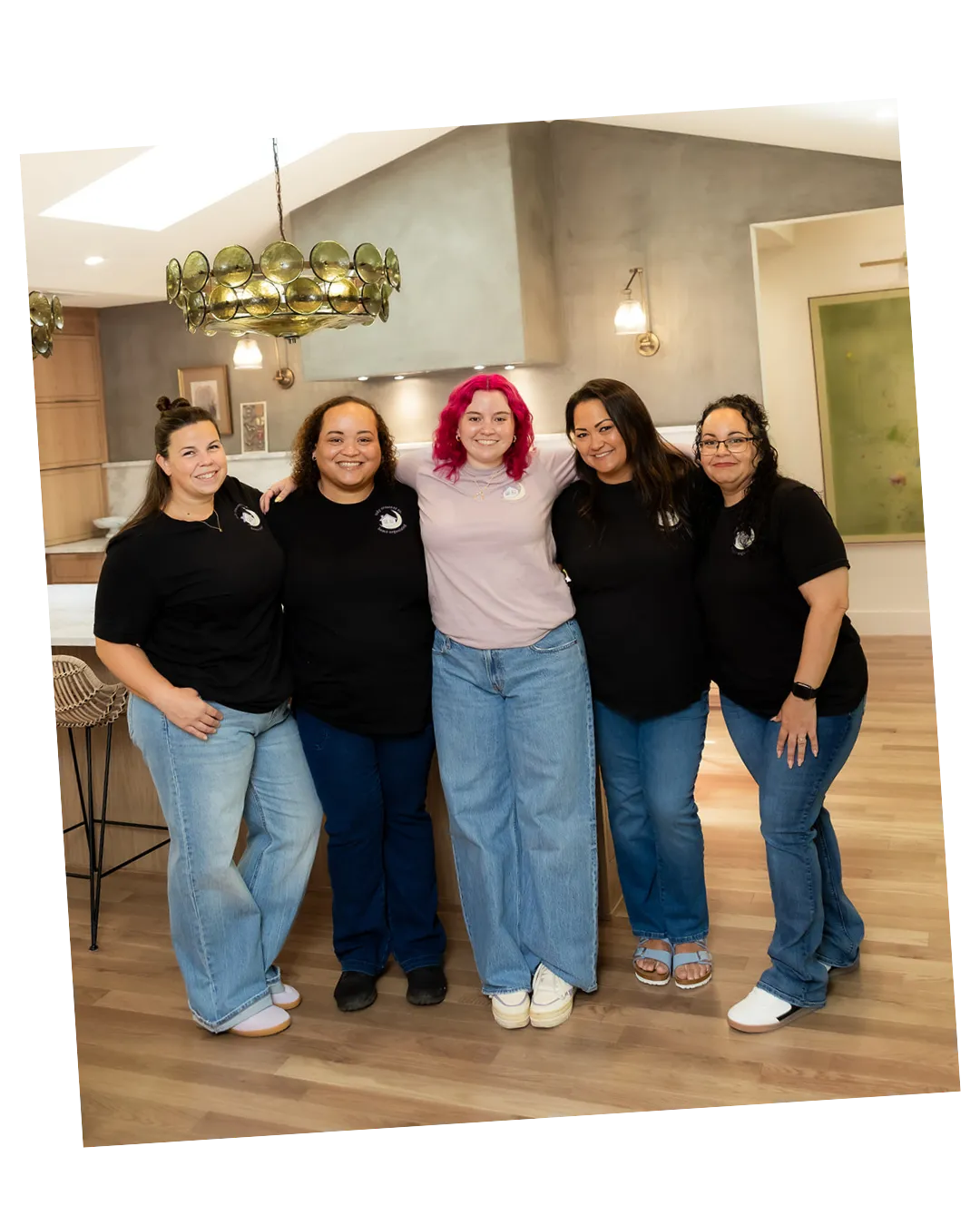
We serve the Greater Austin area and nearby communities.
Cities and towns
Round Rock, Cedar Park, Pflugerville, Georgetown, Leander, Lakeway, Bee Cave, West Lake Hills, Rollingwood, Sunset Valley, Bastrop, Manor, Hutto, Kyle, Buda, San Marcos, Dripping Springs, Wimberley, Elgin, Taylor, Liberty Hill, Jarrell, Volente, Jonestown, Lago Vista, Point Venture, Smithville, and Del Valle.
Austin neighborhoods
Tarrytown, Pemberton Heights, Clarksville, Old Enfield, Westlake Hills, Barton Creek, Rob Roy, Davenport Ranch, Lost Creek, Spanish Oaks, Steiner Ranch, Rough Hollow, Serene Hills, Flintrock at Hurst Creek, Circle C Ranch, Travis Country, Belterra, Zilker, Bouldin Creek, Barton Hills, Avery Ranch, Brushy Creek, and Teravista.
Not sure if you're in range? Just ask. A few spots past the one-hour mark carry a small trip fee, and I'll tell you upfront.
Most pantries are two sessions a few days apart. Day one is when everything comes out and decisions about what stays and what goes get made. Day two is when the organizing magic happens. If you prefer it finished in a single day, we can often do that with a meet-and-measure visit beforehand.
No. We source everything. Your only job is approving the mood board and the budget that comes with it.
Product is the flexible part of the number, and it flexes a lot. Clear plastic bins do the same functional job as acrylic or designer baskets, they just look different doing it. Tell us the number you're comfortable with and we'll build the mood board to it.
Those are often the biggest improvements. A narrow pantry usually isn't short on space, it's short on access. Pull-out bins and a can organizer turn the back two thirds of every shelf from storage you forgot about into storage you use.
Lazy Susans, every time. Same fix for a deep corner cabinet in the kitchen.
That's your call, and we ask before we start. Either we toss as we go and donate anything still good to a local food pantry, or we set every past-date item aside in one spot for you to review before it leaves the house.
Nope! We will only recommend decanting if we genuinely think it will work for you longterm. If you've tried it before and it didn't work, just let us know!
One space. Two sessions. And the last time you'll ever reorganize this pantry yourself.


[email protected] | 512.706.9343
Tidy Crescent Co. is based in Bastrop County and serves The Greater Austin Area. We are elite professional organizers in the Paige, TX professional organizers directory on FindMyOrganizer.com.
© 2025-2026 Tidy Crescent Co LLC